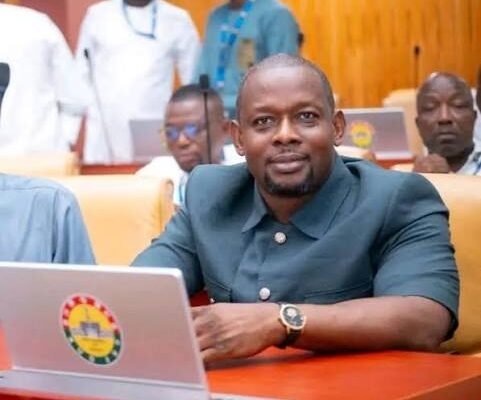
New Patriotic Party (NPP) Member of Parliament for Akuapem North, Sammi Awuku, has challenged President John Dramani Mahama and Finance Minister Dr Cassiel Ato Forson to provide clear answers on youth unemployment and the government’s job creation promises.
In an open letter addressed to the President and the Finance Minister ahead of the presentation of the 2027 Budget Statement, Mr Awuku questioned the impact of key government initiatives, including the 24-Hour Economy, the One Million Coders Programme and the No Fees Stress initiative.
He argued that nearly two years into the Mahama administration, young Ghanaians deserve measurable results rather than campaign promises, particularly regarding employment opportunities, access to education and the rising cost of living.
Citing figures from the Ghana Statistical Service, Mr Awuku noted that youth unemployment among people aged 15 to 24 stands at approximately 32.4 per cent, while close to two million Ghanaians aged between 15 and 35 are neither employed nor engaged in education or training.
He said the statistics reflected the struggles of thousands of young people seeking decent jobs, financial independence and opportunities to improve their livelihoods.
Questions 24-Hour Economy Job Creation
Mr Awuku recalled President Mahama’s campaign promise to introduce a 24-Hour Economy and the One Job, Three Shifts, Three People formula, which was presented as a major strategy for creating employment opportunities.
He questioned how many jobs the flagship 24-Hour Economy policy had created since the government assumed office, insisting that the youth deserved concrete figures to assess its impact.
He also demanded accountability over the One Million Coders Programme, asking the government to disclose how many participants had successfully completed the training and how many had secured employment or started earning an income through the initiative.
According to him, providing such information would help establish whether the programme was delivering on its promise to equip young people with relevant digital skills and improve their employment prospects.
Demands Accountability Over No Fees Stress Initiative
The Akuapem North MP also raised concerns about the increasing cost of tertiary education, highlighting rising hostel fees, food prices, transportation costs and the cost of learning materials.
He called on the government to provide an update on the No Fees Stress initiative, particularly the number of first-year tertiary students who had benefited since its introduction.
He further asked how many students had received financial support early enough to secure their admission and begin their academic programmes without having to pay academic fees upfront.
Raises Concerns Over Rising Utility Tariffs
Beyond unemployment and education, Mr Awuku expressed concern about increases in residential electricity and water tariffs, arguing that the rising cost of utilities was placing additional pressure on households.
He maintained that economic stability must translate into decent employment opportunities and improved living conditions for ordinary Ghanaians.
According to him, declining inflation figures alone cannot adequately address the concerns of a university graduate who remains unemployed or a student struggling to afford tertiary education.
‘Adwuma No Wɔ He?’
In his concluding remarks, Mr Awuku urged President Mahama and Dr Ato Forson to use the 2027 Budget presentation to provide measurable results, clear timelines and a comprehensive plan for youth employment and development.
He stressed that young Ghanaians who voted for change were not seeking favours but meaningful opportunities to secure their future.
“Adwuma no wɔ he?” (Where are the jobs?) he asked, questioning where the hope promised to Ghana’s youth could be found.
He insisted that the government must move beyond political assurances and demonstrate how its policies are improving the lives of young people.
The open letter comes as attention turns to the government’s 2027 Budget Statement, with youth employment, the cost of education and household economic pressures expected to remain key issues in the national conversation.