The Bank of Ghana’s newly launched Heritage Series banknotes are facing mounting public scrutiny following fresh questions about the historical accuracy of some personalities and images featured on the redesigned currency.
Unveiled on November 12, 2026, under the theme “The Cedi, Our Future: Secure, Designed to Last,” the new banknotes were introduced to celebrate Ghana’s history and recognise notable personalities. However, controversies surrounding the GH¢50 and GH¢2 notes have sparked widespread debate.
One of the major concerns involves the GH¢50 banknote, which features an image intended to honour Madam Theodosia Okoh, the renowned designer of Ghana’s national flag.
However, claims circulating on traditional and social media suggest that the portrait may resemble her sister, Dr Letitia Obeng, the celebrated zoologist and first Ghanaian woman to earn a doctorate.
The controversy has also extended to the Makola Market illustration featured on the Heritage Series banknotes. Social media users have alleged that one of the women depicted bears a striking resemblance to Victoria Esther Nkhama, popularly known as Esther Bosha, a Zimbabwean tourist, Emirates cabin crew member and social media influencer.
The claim gained traction after videos circulated on TikTok, generating further discussion about the selection of images used on the new Ghana cedi banknotes.
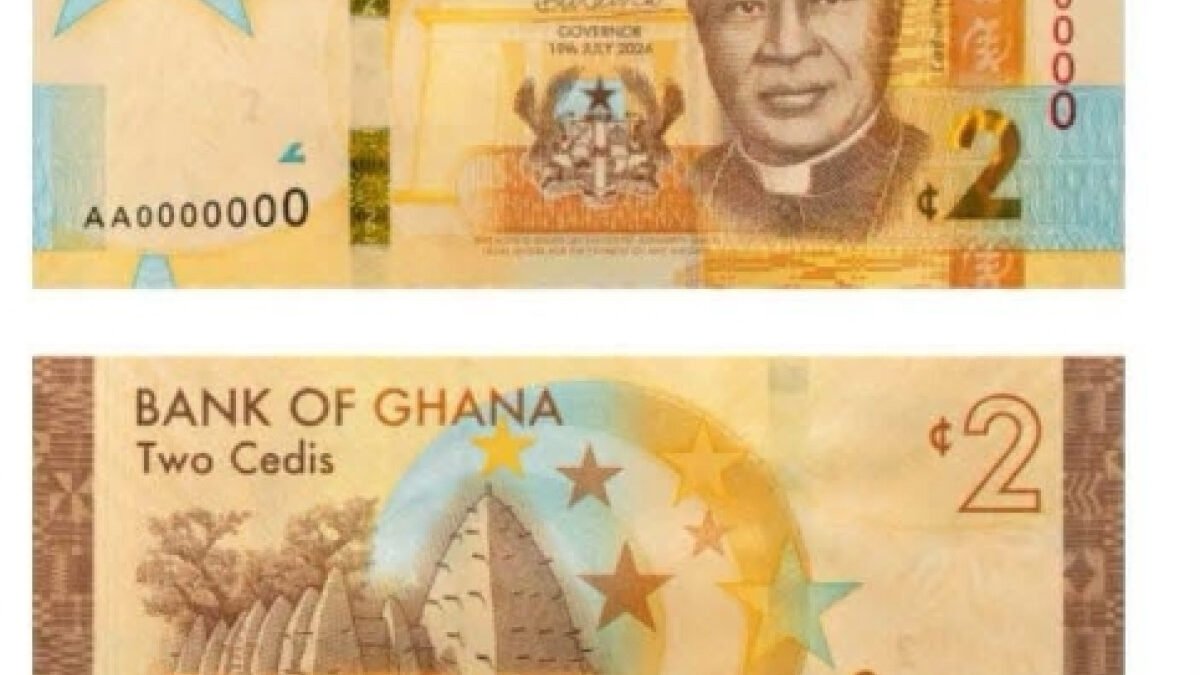
Fresh questions have also emerged over the GH¢2 banknote, following concerns raised on Tuesday’s edition of Peace FM’s morning programme, Kokrokoo.
The Bank of Ghana identifies Cardinal Peter Poreku Dery on the note as Ghana’s first Catholic Cardinal. His inclusion is intended to represent religious freedom, interfaith tolerance and peaceful coexistence.
However, critics have challenged the historical description, arguing that Cardinal Peter Kodwo Appiah Turkson was the first Ghanaian elevated to the rank of Cardinal by the Catholic Church.
Cardinal Turkson was appointed by Pope John Paul II on October 21, 2003, while Cardinal Peter Poreku Dery was elevated to the rank in 2006.
The latest concerns have intensified calls for the Bank of Ghana to explain the research, selection and verification process behind the Heritage Series banknotes.
As public debate grows, questions remain over how the alleged historical and visual inaccuracies found their way onto Ghana’s redesigned currency, with many calling for greater transparency from the Central Bank.