Welcome to Accra and thank you for joining us at the first Invest Ghana Summit. To those who have travelled from across Africa and beyond, I extend the warmest welcome on behalf of the people of Ghana.
Let me especially welcome my brother, Aliko. We are proud of you as an African businessman and delighted to have you with us today.
Your investments in cement, fertiliser and petroleum refining show what African entrepreneurs can build when they commit capital long term and adopt an integrated view of the African market.
Our theme, “Investing in Ghana’s New Economy: Building a Productive Economy that Creates Value and Competes Globally”, poses a practical question. What can we produce competitively in Ghana and sell to Africa and the world?
That question matters to investors seeking their next opportunity.
It matters equally to the Ghanaian entrepreneur expanding a factory, the farmer seeking a reliable buyer, and the young person seeking a first job. The investment we seek must connect the ambitions of all these people.
Africa has a young, enterprising population, growing cities and rising demand for goods and services. Our producers have an opportunity to meet more of that demand.
Processing more of what we grow and extract creates jobs in factories and opens markets for farmers, transporters and suppliers. We also retain more of the value generated by our resources.
The African Continental Free Trade Area gives us a way to do this at scale. A manufacturer considering a new plant needs to know if it can serve customers across several countries from a single production base.
That decision depends on how goods move across borders, whether standards are recognised, and how quickly businesses can clear customs and receive payment.
As governments, we must make it easier to trade in practice. We must also address the costs businesses face at home. Unreliable and expensive power makes production uncompetitive.
Short-term, high-interest credit makes projects unfeasible. Weak transport links increase the cost of moving raw materials and finished goods along the value chain.
These constraints hit smaller firms hardest because they have the least room to absorb them.
As is often said, Government is the enabler, not the operator. Government will enable and the private sector will deliver. The private sector will build much of Africa’s productive capacity.
Governments can provide reliable infrastructure and predictable rules. Businesses must turn those conditions into factories, better products, jobs and exports.
Financial institutions have a role in providing the patient capital that enables a promising business to become competitive.
The Dangote Group’s investments in Ghana demonstrate how an African business can expand across borders. Its proposed sugar project in the Bono East Region also illustrates the impact of an industrial investment on agriculture.
A viable plant requires a reliable supply of cane, the growers need confidence that they will have a buyer at harvest. Building that relationship is as important as building the plant itself.
I want more Ghanaian enterprises to reach that scale. I want to see Ghanaian firms supplying regional markets, establishing production elsewhere on the continent, and bringing their suppliers with them as they grow.
Our responsibility is to create the conditions that enable them to make that leap.
The Minister for Finance announced our New Economy Programme last Thursday during his presentation of the 2027 budget estimates to Parliament. The programme will invest almost $10 billion across eight (8) key sectors of the economy from 2027 to 2030.
The New Economy Programme aims to transform Ghana’s economy by improving resilience and accelerating growth. My government’s economic strategy begins with production. We are modernising agriculture, investing in transport links and digital connectivity, and improving energy supply reliability.
These are practical requirements for firms that want to lower costs, meet delivery deadlines and compete abroad.
We are also improving how government works with investors. A company should find out early which approvals it needs, who is responsible for them and how to resolve delays.
Our investment promotion reforms aim to strengthen investor protections, improve coordination across public institutions and provide a formal avenue for addressing grievances. The Ghana Investment Promotion Authority will play a central role in guiding investors through that process.
The 24-Hour Economy and Accelerated Export Development Programme brings production, processing, logistics and market access together. For instance, take agro-processing.
A factory operates more reliably when growers deliver throughout the season, storage cuts losses, and transport connects the plant to buyers and ports. Each investment is more viable when the supply chain works.
This Summit offers investors the opportunity to examine how those connections will operate in specific projects. The Ghana Investment Promotion Authority has mapped opportunities across all sixteen regions.
These include commercial farming and agro-processing, mineral processing, energy, tourism, healthcare, logistics and digital services. This regional work provides investors a starting point for identifying locations, local partners and projects suited to their expertise.
Opportunities under the 24-Hour Economy programme include the Volta Economic Corridor, the Legon Pharmaceutical Innovation Park, the Kumasi Machinery and Technology Park, the Akosombo–Juapong Garments and Textiles Park, and the Tamale Air Cargo Hub.
These initiatives illustrate the breadth of investments we seek, spanning agricultural value chains, industrial production and logistics that help Ghanaian goods reach export markets.
I encourage you to speak directly with the project teams and Ghanaian businesses represented here. Ask what it will take to deliver each project, what role your firm might play, and where local suppliers and workers can contribute.
Those conversations mark the beginning of a sound investment decision.
I encourage you to invest in Ghana. You can do so with confidence because Ghana has long distinguished itself as one of Africa’s most stable and dependable countries.
Ghana today has one of Africa’s most resilient and promising economies. After a period of economic difficulty, we have made significant progress restoring macroeconomic stability, rebuilding confidence and putting the economy on a stronger growth path.
In 2025, Ghana’s Gross Domestic Product (GDP) reached approximately US$114 billion, positioning the country as Africa’s eighth-largest economy and the second largest in West Africa.
According to projections by the International Monetary Fund (IMF), GDP is expected to reach US$128.64 billion in 2026, with Ghana set to maintain its position as Africa’s eighth-largest economy and the second-largest in West Africa.
Our economy also grew by 6 per cent in 2025 and is projected to grow by 5.7 per cent in 2026. Inflation has fallen sharply from 23.5 per cent in January 2025 to 5.5 per cent in October 2026, bringing greater stability to the business environment.
Our external position has also strengthened considerably. Gross international reserves stood at US$12.05 billion in September 2026, representing 4.5 months of import cover.
This is supported by a strong trade surplus of US$8.86 billion in the first eight months of 2026. The primary balance recorded a surplus of 1.4 per cent of GDP, exceeding the fiscal target. Public debt has remained broadly stable at 45.9 per cent of GDP as of July 2026.
Poor negotiation of the debt restructuring risked drawing Ghana into a second catastrophic debt default.
However fiscal discipline and competent management of the economy have kept us on track in honouring our domestic and external debt obligations. Our aim is to achieve investment grade by 2030.
Our currency, the cedi, has shown greater stability, supported by stronger foreign exchange reserves and improved external balances. The currency appreciated by 40.7 per cent against the US dollar in 2025 and remained about 7 per cent stronger in September 2026 than in September 2025.
In August 2026, Ghana’s Business Confidence Index stood at 107.8, while the Consumer Confidence Index reached 111.9. The Composite Index of Economic Activity (CIEA) also expanded by 14.9 per cent year on year in July 2026.
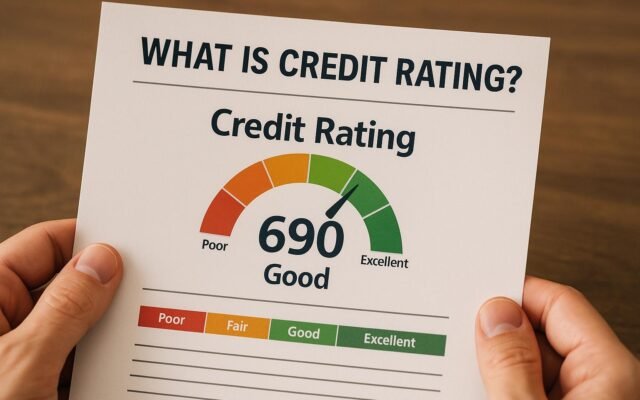
This positive outlook is also reflected in Ghana’s sovereign credit ratings. S&P Global affirmed Ghana’s B-/B ratings with a Stable Outlook.
Fitch upgraded the country’s rating from B- to B with a Positive Outlook, while Moody’s upgraded the long-term foreign-currency and local-currency issuer ratings to ‘B3’ from ‘Caa1’ and revised the outlook to Stable.
Together, these indicators point to an economy on a stronger footing, providing greater confidence and a more stable foundation for investment, production and long-term business growth.
In addition, Ghana has enjoyed more than three decades of constitutional democracy, peaceful transitions of power, respect for the rule of law, and strong institutions. This provides the stability and predictability that long-term investment requires.
We are also distinguished by the openness of our society, the warmth of our people, the ease with which international businesses can build relationships here, and Ghana’s long-standing reputation as a welcoming place to live and do business.
Ghana is home to the African Continental Free Trade Area (AfCFTA) Secretariat, giving businesses here access to the wider African market of about 1.5 billion people and a combined GDP of approximately US$3.4 trillion.
Beyond Africa, businesses that establish production in Ghana benefit from preferential access to some of the world’s largest consumer markets.
Qualifying Ghanaian exports enjoy duty-free and quota-free access to the United Kingdom under the Ghana–UK Interim Trade Partnership Agreement and to the European Union under the EU–Ghana Interim Economic Partnership Agreement.
Ghana also benefits from China’s preferential zero-tariff arrangements for African countries and from the African Growth and Opportunities Act (AGOA).
The economy we are building should be visible in the everyday lives of our people. A farmer should sell more of their harvest to a nearby processor. A Ghanaian inputs supplier should win a contract with a major manufacturer.
A young technician who trains here should put those skills to work here. That is what we mean by creating value in Ghana.
To our Ghanaian businesses, I encourage you to use this Summit to find partners who can help you expand production, improve technology, and enter new markets.
To our financial institutions and development partners, I ask you to work with project sponsors to structure financing that matches the time needed to build and grow a productive enterprise.
To investors from across Africa and around the world, I invite you to invest in Ghana. Meet the people who will build with you.
Visit the regions where these opportunities are taking shape. Use this Summit to agree on the next step, whether a site visit, a feasibility study, or a discussion with a potential partner.
My government will continue to work with you to advance viable projects from discussion to implementation. I look forward to seeing the businesses you build here, the jobs they create, and the Ghanaian goods and services they take to new markets.
I wish you productive discussions and a successful Summit.
Thank you.