President John Dramani Mahama has announced that Ghana is now the eighth-largest economy in Africa and the second-largest in West Africa, following an estimated Gross Domestic Product (GDP) of US$114 billion in 2025.
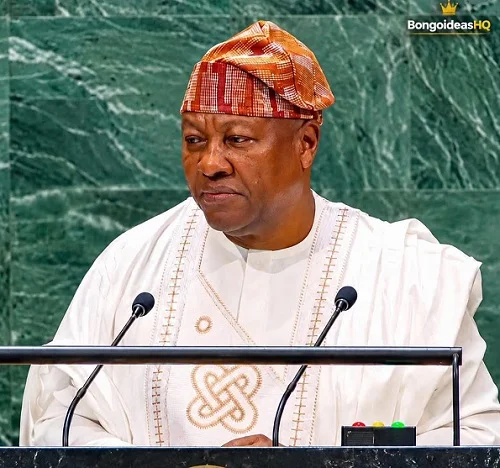
Speaking at the opening of the Ghana Investment Summit in Accra on Monday, November 16, 2026, President Mahama said the country’s economic performance had strengthened its position as an attractive investment destination.
“In 2025, Ghana’s Gross Domestic Product reached approximately $114 billion, positioning the country as the 8th largest economy in Africa and the 2nd largest in West Africa,” he said.
He further disclosed that the International Monetary Fund (IMF) projects Ghana’s economy to reach approximately US$128.64 billion by the end of 2026, maintaining its position among the continent’s leading economies.
The President highlighted the country’s economic recovery, noting that the economy expanded by six per cent in 2025, with growth projected at 5.7 per cent in 2026.
He, however, suggested that growth could have been stronger but for the impact of geopolitical tensions involving Iran.
On inflation, President Mahama said the rate had declined significantly from 23.5 per cent in January 2025 to 5.5 per cent in October 2026, describing the development as evidence of progress in restoring macroeconomic stability.
He also reported that Ghana’s gross international reserves stood at US$12.05 billion in September 2026, equivalent to 4.5 months of import cover.
The country recorded a trade surplus of US$8.86 billion during the first eight months of the year, contributing to the improvement in its external position.
On fiscal performance, he said the government had achieved a primary surplus equivalent to 1.6 per cent of GDP, exceeding its target, while public debt remained broadly stable at 45 per cent of GDP as of July 2026.
The debt position, however, has been disputed by former Finance Minister Dr Mohammed Amin Adam, who puts Ghana’s public debt at 47.5 per cent of GDP as of October 2026.
President Mahama maintained that the government’s approach to debt restructuring and fiscal management had helped prevent the country from slipping into another major debt default.
He said the administration remained committed to fiscal discipline and improving Ghana’s creditworthiness, with the ambition of securing an investment-grade credit rating by 2030.
On the currency front, he disclosed that the cedi appreciated by 40.7 per cent against the US dollar in 2025 and remained about seven per cent stronger in September 2026 compared with the same period in 2025.
He also cited improving business and consumer confidence, which stood at 107.8 and 111.9, respectively, in August, alongside a 14.9 per cent year-on-year increase in the Composite Index of Economic Activity in July.
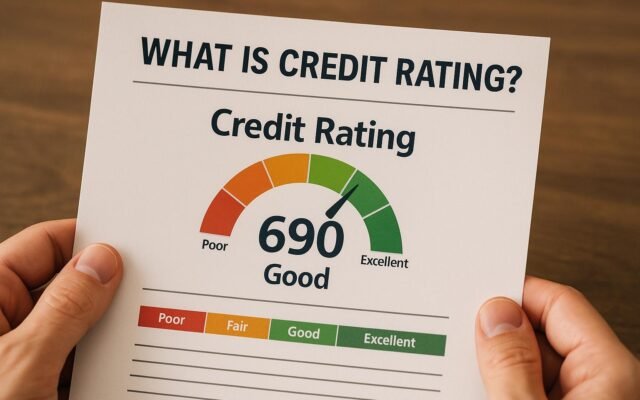
The President further pointed to improvements in Ghana’s international credit ratings. He said S&P Global had maintained the country’s B-/B ratings with a stable outlook, while Fitch Ratings upgraded Ghana from B- to B with a positive outlook.
Moody’s had also upgraded its long-term issuer ratings and revised the outlook to stable.
Despite the positive indicators, inflation remains a potential concern over the medium term, with Fitch Solutions projecting that the rate could rise above 10 per cent in the second half of 2027.
President Mahama also highlighted Ghana’s strategic position as host of the Secretariat of the African Continental Free Trade Area (AfCFTA), which provides access to a continental market of approximately 1.4 billion people with a combined economic output of about US$3.4 trillion.
He said Ghanaian exporters also benefit from preferential trade arrangements with the United Kingdom, the European Union and China, as well as access to the United States market under the African Growth and Opportunity Act (AGOA).
He attributed Ghana’s investment appeal not only to its economic prospects but also to its three decades of constitutional democracy, peaceful transfers of political power and commitment to the rule of law.
The President stressed that the ultimate measure of economic recovery must be its impact on ordinary Ghanaians, particularly through increased employment, stronger local businesses and opportunities for producers.
He said the recovery must translate into practical improvements in people’s lives, including creating opportunities for farmers to sell more of their produce to nearby processing companies.
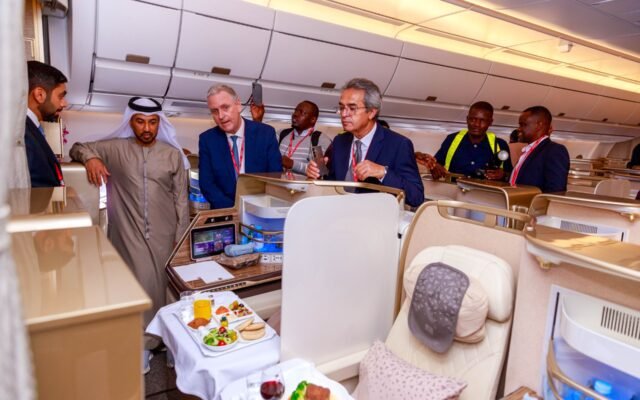
The Ghana Investment Summit brought together government officials, business leaders and international investors to explore investment opportunities and partnerships aimed at accelerating economic growth and industrial development.
Source: Kobina Darlington, Contributor