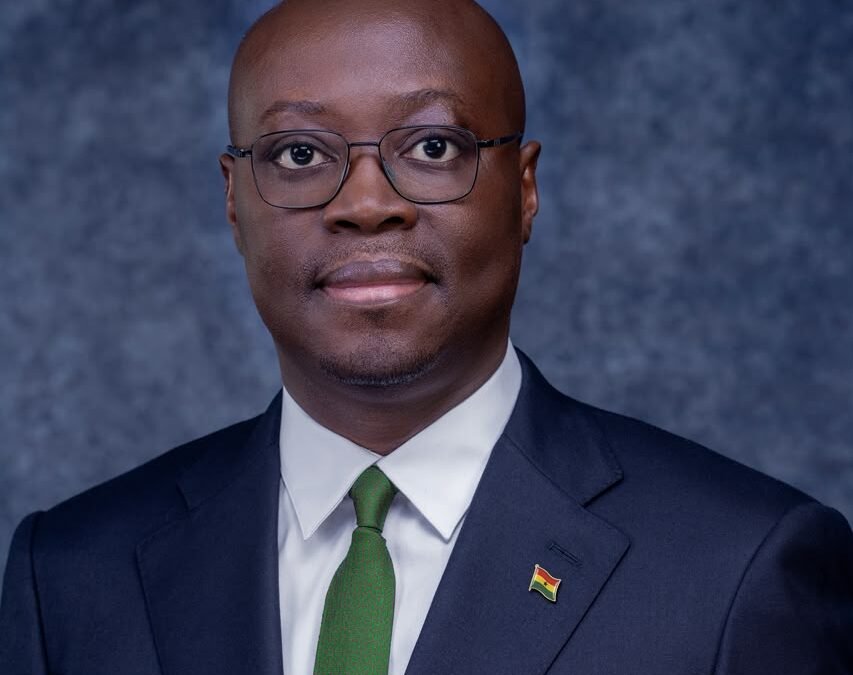
Finance Minister Dr Cassiel Ato Forson has announced a US$10 billion-equivalent investment over four years to transform Ghana’s economy, create jobs and improve living standards under the government’s New Economy agenda.
Presenting the 2027 Budget Statement and Economic Policy to Parliament on Thursday, November 12, 2026, Dr Forson said the programme would run from 2027 to 2030, focusing on eight key pillars aimed at expanding production, strengthening industries and creating sustainable employment.
“Over a four-year period, from 2027 to 2030, the government will spend US$10 billion equivalent to create a modern Ghanaian economy for jobs and prosperity,” he told Parliament.
The eight pillars are macroeconomic stability and affordable finance; commercial agriculture; energy infrastructure; critical minerals value addition; tourism, culture and creative arts; textiles and garments; pharmaceuticals and manufacturing, including biomanufacturing; and the technology economy.
Dr Forson explained that the pillars would operate as an integrated productive system, with each sector supporting the growth of the others.
“Affordable finance must reach farmers, manufacturers and exporters. Agriculture must supply food and industrial raw materials, while reliable energy must support a 24-hour economy,” he said.
He said the government would prioritise processing Ghana’s natural resources locally before export, particularly minerals and cocoa, to create jobs and retain more economic value within the country.
Tourism, culture and the creative arts would also receive attention, with the government seeking to commercialise Ghana’s heritage and creative industries to generate business opportunities, employment and foreign exchange.
On textiles and garments, Dr Forson said the agenda would expand domestic production, create jobs and connect local businesses and skills to international fashion markets.
He further highlighted plans to strengthen pharmaceutical and biomanufacturing industries to increase local production of medicines and vaccines, improve health security and supply markets across Africa.
“Pharmaceuticals and biomanufacturing must produce more medicines and vaccines in Ghana, strengthen health security and supply markets across Africa,” he stated.
The technology economy, he added, would open up new employment opportunities and foreign exchange earnings, with improved digital connectivity allowing skilled Ghanaians to participate in economic activities regardless of their location.
Dr Forson said the New Economy agenda would provide the framework for directing the fiscal space created by Ghana’s economic recovery into productive investments.
He explained that government would focus on maintaining macroeconomic stability, providing strategic infrastructure, developing bankable projects and creating predictable conditions for businesses to thrive.
The private sector, he noted, would be expected to lead investment, innovation and production, while driving sustainable job creation.
“Government support will be transparent, time-bound and linked to verifiable results,” he assured Parliament.
The Finance Minister said the government would protect the gains made through economic recovery by maintaining fiscal discipline, accountability and prudent financial management while pursuing faster growth and higher employment.
He stressed that the programme’s success would not be judged solely by the amount of money spent or the number of projects undertaken, but by the jobs created, improvements in living standards and the pace of development across communities.
Dr Forson consequently urged Ghanaians to support the economic transformation agenda, describing the recovery as an opportunity to make strategic long-term investments rather than repeat past economic mistakes.
“I call on Ghanaians to make a defining national choice about the future we want to build. We can spend the recovery as though history has taught us nothing, or invest in it,” he said.