Architecture firm ArchXenus has celebrated 15 years of practice with the launch of the GeneXus book, a publication featuring 12 selected projects from its portfolio, as it seeks to strengthen the documentation of Ghanaian architecture and make local design inspiration more accessible.
The anniversary celebration, held on 10 and 11 November 2026 at Christ Temple East in Accra, a building designed by ArchXenus and constructed under its management, also featured the launch of the Xenus Impact Foundation and the African Urban Futures Conclave. The two-day event combined a reflection on the firm’s 15-year journey with discussions on architecture, housing, city planning, climate-conscious construction and investment.
The firm, which has delivered more than 140 projects since it began operating, is led by Nana Akua Oppong-Birmeh and Agnes Ofosu-Appiah, both Partners and Principal Architects at ArchXenus E and Co-Directors of the Xenus Impact Foundation.
The partners said the firm’s greatest achievement could not be measured only by completed buildings, but also by the people whose confidence and professional lives had been strengthened through its presence, particularly women pursuing their professional interests while managing family responsibilities.
“Just by virtue of our existence, so many people have found their feet, especially women. They have found the confidence to pursue their passion, to proceed into family life, and not worry about so many things, because we are modelling this and creating an opportunity for us to grow,” Nana Akua said.
“Being partners and running the firm together has taught us that there’s strength in numbers. We are both married women with children, so we have life happening as well as work that is ongoing. When one person is down or out, the other steps in. We complement each other, which allows us to work, see where the gaps are in the built industry, and provide solutions for them,” Agnes said.
Nana Akua said GeneXus responded to a gap in the documentation of Ghanaian architecture, with students and professionals often turning to foreign publications for examples and inspiration. Every project in the book can be visited, giving readers tangible local examples to study, experience and draw ideas from.
“We usually rely on foreign publications for inspiration. This is an opportunity for people to gather inspiration right here, in our cities, in Ghana, designed and led by Ghanaians, with familiar names, in places where you can actually pick a cab, go and experience them, and get inspired,” she said.
Agnes said the African Urban Futures Conclave would provide a platform for professionals and other stakeholders in Ghana and West Africa to address issues affecting the built environment together. She said conversations in the sector were often siloed, with architects speaking mainly to architects and engineers to engineers, even though city challenges cut across professional boundaries.
The full Conclave will take place in April 2027 and is expected to be held every two years, bringing stakeholders together to exchange ideas, develop plans, make connections and agree on actions that can be reviewed at subsequent editions. Ahead of it, ArchXenus has agreed a challenge with the Ghana Institute of Architects inviting architects to showcase solutions to the problems facing cities.
The Conclave sits within the Xenus Impact Foundation, which the partners established to develop ideas beyond the firm’s commercial work and to support communities through impact projects and corporate social responsibility. The Foundation works in four ways: publishing, through AX Press, which includes GeneXus; building, through impact projects; convening, through gatherings such as the Conclave; and showing, through exhibitions, including Time Space and Essence in Venice in 2027.
Nana Akua called for a shared vision to guide the development of Ghanaian cities, explaining that architects are often limited to the particular plots of land on which they are commissioned to work, and that coordination among stakeholders would allow individual projects to contribute to a common goal.
“For an architect, you are usually given a defined plot of land to work with. You can think beyond it, but you can only work on that plot. Most cities that have developed have a vision for what they want to be, and that makes it easier for everyone to plug into that vision and let us have the kind of city that we all dream of,” she said.
Agnes questioned the housing choices emerging from Ghana’s construction activity, saying that despite a housing deficit commonly put at about 1.8 million units, middle-income earners remained caught between luxury developments and affordable housing schemes. She urged the sector to look beyond formal market segments, including people sleeping on the streets and kayayei who move to cities for work.
“When you see a construction boom, it’s not for middle income. There’s a lot of luxury, and there are a lot of affordable housing schemes. But somewhere in the middle, there’s a gap. And the kayayei: when they arrive in Accra or whichever big city they go to, what buildings and what systems have we put in place for them?” she said.
The Foundation’s pilot impact project, CoSpace, responds to that gap, exploring how middle-income earners can afford dignified homes in established neighbourhoods closer to work and school rather than travelling long distances between the two.
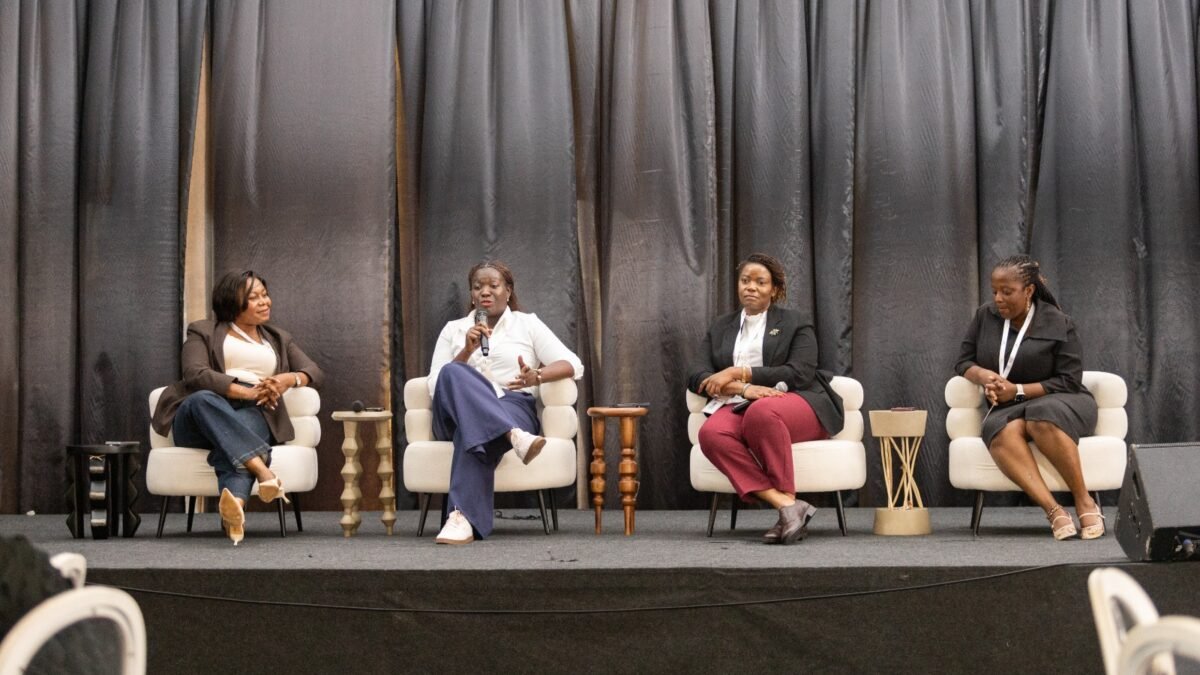
These issues formed part of the wider discussions on the second day of the celebration, held under the theme “Conversations & Connections” as a foretaste of the full Conclave.
The gathering examined what cities should make possible and the architectural profession’s role in shaping Ghana’s cities, drawing on lessons from practice in Ethiopia. Discussions also considered the importance of climate-responsive buildings and how green construction could be delivered at scale.
The human dimension of architecture was explored through a virtual address and moderated discussion on “Designing for Dignity”, while conversations on moving from vision to delivery considered how ideas and plans could translate into action.
The discussions also examined what makes urban projects investable, with capital, business connections and curated meetings forming part of the engagement. Together, the conversations reflected the need for architecture to go beyond individual buildings and respond to the wider social, economic and environmental needs of cities.